
ADVERTISEMENT
ADVERTISEMENT
ADVERTISEMENT
The Fascinating History Behind a Daily Habit
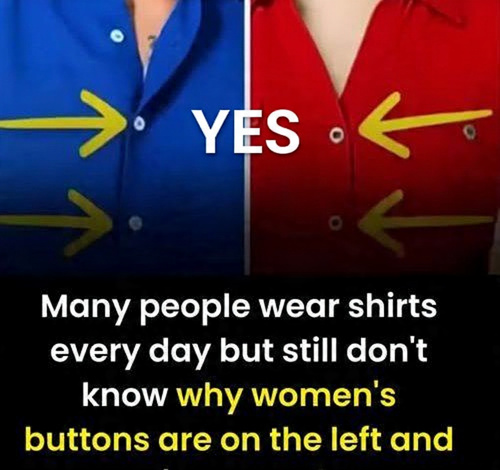
Every day, millions of people around the world perform the same small, almost mindless action: buttoning a shirt. It’s so routine that most of us never stop to examine the garment itself. But look a little closer, and you’ll notice a curious detail—men’s shirts button on the right, while women’s shirts button on the left.
This difference isn’t accidental. It’s a centuries-old tradition shaped by history, class, and practicality. The story behind it reveals how deeply the past still influences even the simplest parts of our modern lives.
1. The Origins Go Back to the 1800s
To understand why button placement differs, we have to travel back to the 18th and 19th centuries, when clothing was far more than a fashion choice—it was a symbol of status.
Why Women’s Shirts Button on the Left
During the Victorian era, wealthy women wore elaborate outfits made up of corsets, petticoats, bustles, and layers of fabric. These garments were not easy to put on alone. As a result, upper-class women were commonly dressed by servants or maids.
Because most people are right-handed, a maid standing in front of a woman could fasten buttons more easily if they were placed on the wearer’s left side. This arrangement made dressing faster and more efficient.
When mass-produced, ready-to-wear clothing became popular, manufacturers kept this design. Even after women began dressing themselves, left-side buttons remained a sign of refinement and tradition—and eventually became the standard for women’s clothing.
2. Why Men’s Shirts Button on the Right
Men’s clothing evolved along a very different path, shaped by independence and practicality.
A Matter of Function—and Weapons
Historically, men dressed themselves, regardless of social class. Since most men were right-handed, placing buttons on the right side made fastening shirts and jackets easier.
There was also a strategic reason. For centuries, men commonly carried weapons such as swords, which were typically worn on the left hip so they could be drawn with the right hand. If a jacket or shirt overlapped the wrong way, the fabric could interfere with drawing a weapon.
By buttoning garments right over left, men could move freely without snagging their swords. While this may sound dramatic today, it was once a practical necessity.
3. Why the Tradition Still Exists
In the modern world, few people carry swords, and almost no one has a personal dresser. So why hasn’t this convention disappeared?
The answer lies in habit and manufacturing standards. Once clothing production became industrialized, factories followed established patterns to ensure efficiency and consistency. Over time, consumers came to expect these designs.
Changing button placement now would create confusion, increase costs, and disrupt sizing and production norms. As a result, designers continue to follow traditions that no longer serve a functional purpose—but still feel “right.”
4. Does Button Placement Matter Today?
Practically speaking, no. Most people can button a shirt without even looking. However, this tiny detail serves as a quiet reminder that history lives on in everyday objects.
Some modern and unisex fashion brands are beginning to ignore traditional button rules, opting for more neutral designs. Still, the majority of clothing sold today follows the same conventions established hundreds of years ago.
Final Thought
The next time you button up a shirt—whether for work, school, or a night out—take a second look. You’re not just getting dressed. You’re participating in a tradition shaped by servants, swords, and centuries of social customs.
Even the smallest details, like a line of buttons, carry stories that connect the present to the past.
ADVERTISEMENT