
ADVERTISEMENT
ADVERTISEMENT
ADVERTISEMENT
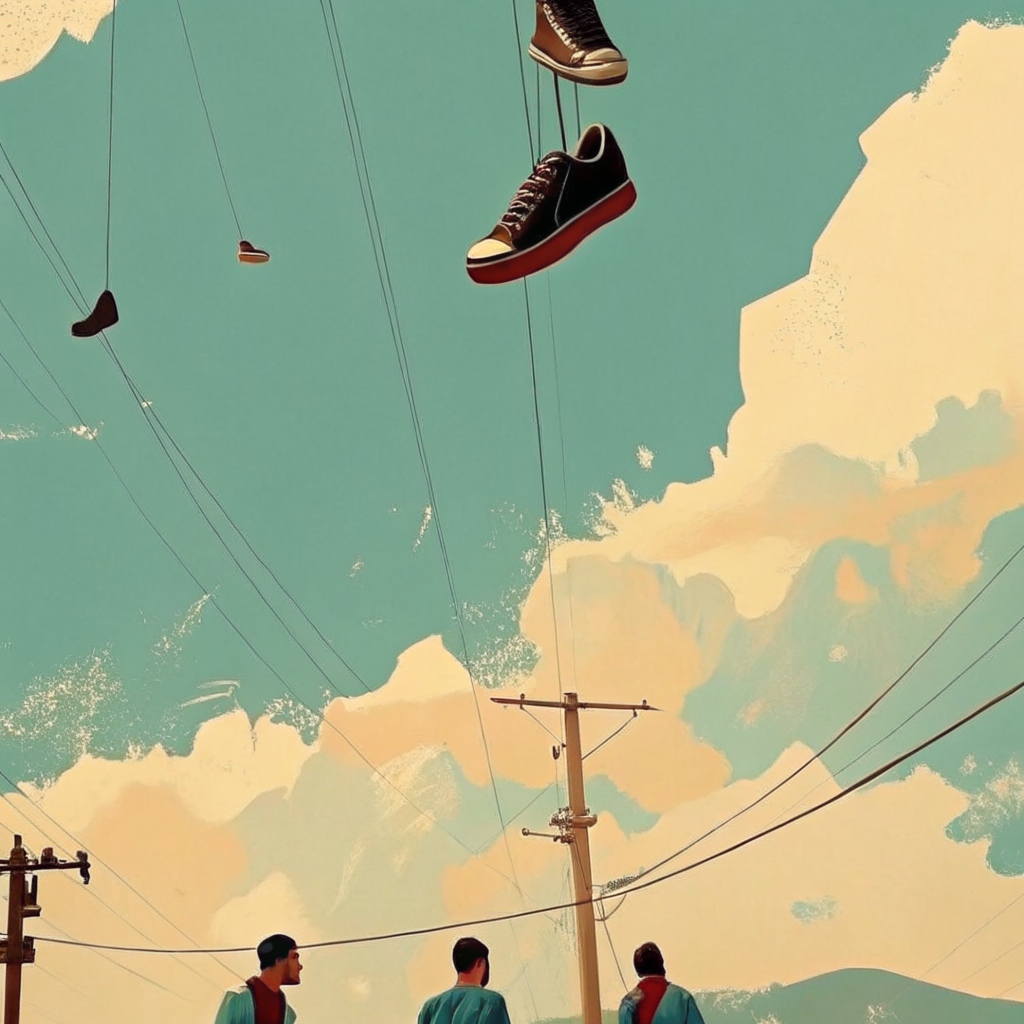
Have you ever looked up while walking down the street and spotted a pair of shoes dangling from a power line? It’s a strange and eye-catching sight that often leaves people wondering how they got there—and why. While it may appear random, hanging shoes often carry deeper meanings shaped by culture, tradition, and social behavior.
From personal milestones to artistic statements, this unusual practice has many interpretations. Let’s explore the most common reasons shoes end up suspended above city streets.
1. Origins and History
The custom of throwing shoes onto power lines dates back decades, with reports appearing as early as the mid-1900s. Although no single origin story exists, the practice gradually spread across cities worldwide. Over time, it evolved into a symbolic act with meanings that vary depending on place and community.
2. Urban Legends and Popular Myths
Shoes on wires are frequently linked to urban myths. Some people believe they mark gang territory or point to illegal activity nearby. While these explanations exist in certain areas, they are far from universal. In many neighborhoods, the act has no criminal meaning at all.
3. Milestones and Rites of Passage
For many young people, tossing shoes onto a power line represents a turning point. It can mark graduation, the end of a school year, or the close of an important chapter in life. The shoes become a visible reminder of growth, freedom, and transition.
4. Informal Memorials
In some communities, hanging shoes serve as makeshift memorials. They may honor someone who has passed away, particularly after a tragic event. Left in a public place, the shoes act as a quiet tribute and a shared symbol of remembrance.
5. Creative and Artistic Expression
Artists and creative individuals sometimes use power lines as an unconventional display space. Hanging shoes can be a form of street art, transforming ordinary objects into visual statements. These displays often spark curiosity and invite interpretation.
6. Pranks and Bullying
Not every pair of shoes carries meaning. In some cases, shoes are thrown onto power lines as a joke or an act of bullying. While it may seem playful to some, it can cause embarrassment or inconvenience for the person who loses their footwear.
7. Signs of Territory
In certain neighborhoods, hanging shoes may signal control or presence. Some gangs use this method to mark territory, making it a subtle but noticeable sign. Because of this association, law enforcement sometimes monitors these displays for context.
8. Social Messages and Awareness
Shoes on power lines can also reflect social commentary. They may draw attention to issues like poverty, homelessness, or violence. By placing shoes in public view, individuals encourage passersby to reflect on broader societal challenges.
9. Group Behavior and Psychology
Psychology plays a role in this phenomenon. Once one pair appears, others often follow. Peer influence and imitation can turn a single act into a widespread visual pattern, showing how collective behavior shapes urban environments.
10. Influence of Media and Pop Culture
Movies, television shows, and music videos often feature shoes hanging from wires, reinforcing the image as part of urban life. These portrayals help spread the idea and encourage imitation across different communities.
11. Meanings Around the World
While commonly seen in U.S. cities, hanging shoes appear in many countries. In parts of Latin America, the practice may connect to festivals or traditions. In some European cities, it carries entirely different interpretations, shaped by local culture.
12. Community Opinions
Reactions to hanging shoes are mixed. Some people view them as visual clutter and want them removed. Others see cultural, artistic, or historical value in them. Local authorities often face the challenge of balancing cleanup efforts with respect for community expression.
Final Thoughts
Shoes hanging from power lines are more than a curious street detail. They reflect personal stories, cultural traditions, social commentary, and collective behavior. Whether marking a life milestone, honoring a memory, or making an artistic statement, each pair adds another layer to the story of the neighborhood it hangs above.
ADVERTISEMENT