
ADVERTISEMENT
ADVERTISEMENT
ADVERTISEMENT
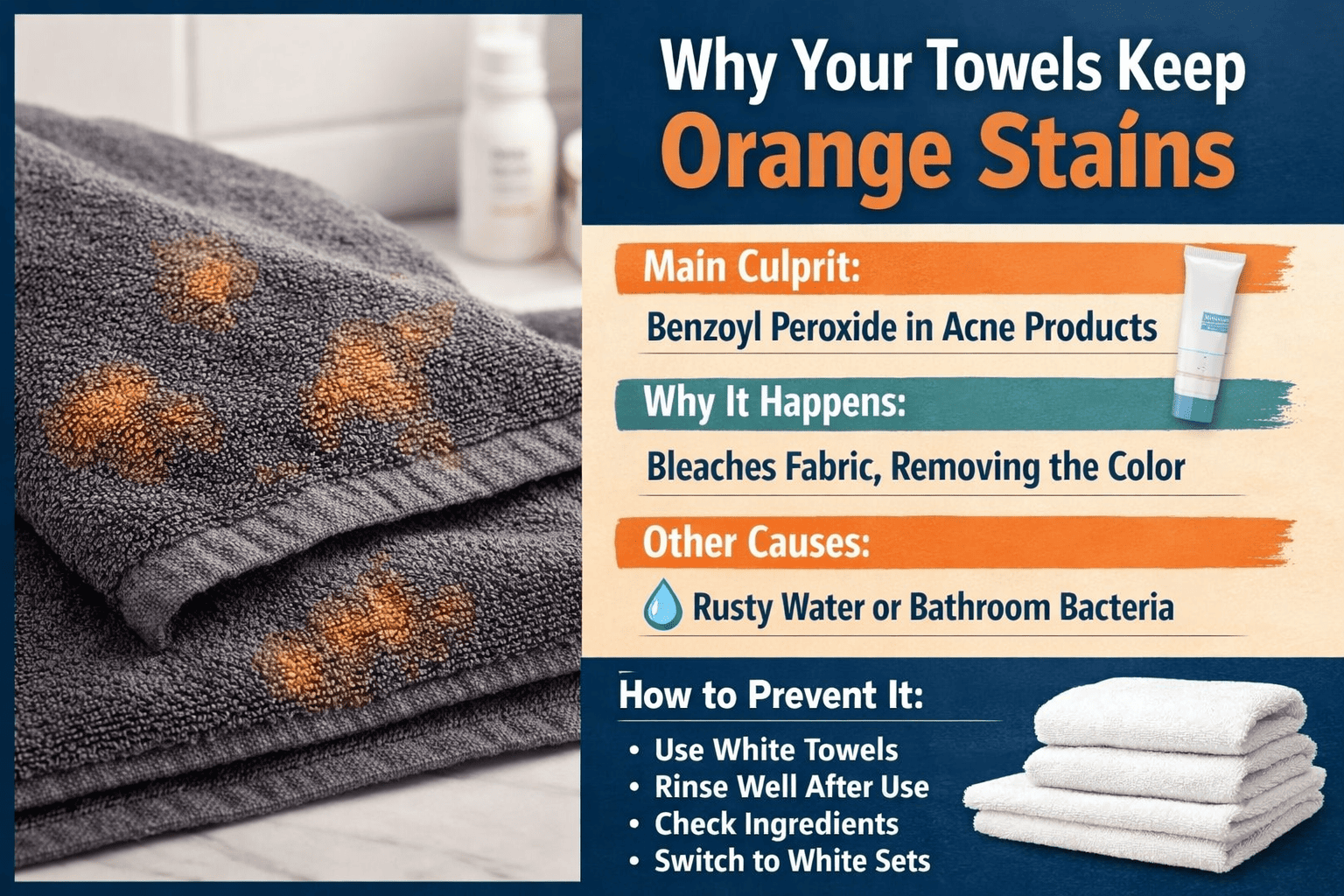
If you’ve noticed strange orange or pinkish spots appearing on your towels, you’re not alone. Many people assume these marks are regular stains, rust, or even mold. But in most cases, the real cause is something you probably use every day in your skincare routine.
The Most Common Cause: Acne Treatments
The main reason towels develop orange discoloration is benzoyl peroxide, a powerful ingredient found in many acne products. While it works very well for clearing breakouts, it also acts as a strong oxidizing agent — similar to bleach.
When benzoyl peroxide touches fabric, it doesn’t create a typical stain. Instead, it removes the color dye from the towel fibers. This leaves behind lighter patches where the original pigment has been stripped away.
Why the Spots Look Orange or Pink
On darker towels — such as black, navy, or charcoal — the bleaching process often reveals bright orange, yellow, or pink tones. These colors are actually the base dye layers that remain after darker pigments are removed.
Here’s an easy way to tell the difference:
-
Light or faded patches: Bleach damage from skincare products
-
Dark or dirty spots: Regular stains like makeup, oils, or dirt
Why These Marks Don’t Wash Out
Unlike normal stains, these discolorations are permanent. Once the dye is removed from the fabric, it cannot be restored with washing, scrubbing, or detergents.
Even worse, if you wash affected towels with other laundry, leftover residue can transfer and cause additional fading on other fabrics.
Other Possible Causes of Orange Marks
Although acne treatments are usually responsible, a few other things can create similar discoloration:
1. Rust in Water
If your home has older pipes or iron-rich water, laundry may develop reddish-brown streaks. This typically affects all clothes, not just towels.
2. Bathroom Bacteria
A type of bacteria that grows in damp environments can create a slimy pink or orange film on surfaces and fabrics. Unlike bleach damage, this can usually be removed with disinfectants or hot washing.
How to Prevent Towel Discoloration
You don’t need to stop using your skincare products — just make a few simple changes:
Use separate face towels
Keep a few white towels specifically for skincare use. Since they have no dye, they won’t show bleaching.
Rinse thoroughly
After applying acne treatments, rinse your face and hands well to remove any leftover product before touching fabrics.
Choose alternative ingredients
Some acne treatments use gentler active ingredients that don’t bleach fabrics.
Switch to white towels
Many people avoid the problem entirely by using white towel sets in their bathrooms.
What to Do With Damaged Towels
Since the discoloration cannot be reversed, the best option is to repurpose affected towels instead of throwing them away. They can still be useful as:
-
Household cleaning cloths
-
Car washing or detailing rags
-
Gym or workout towels
-
Pet care towels
Final Thoughts
Those mysterious orange spots on your towels are usually not stains at all — they’re signs of dye removal caused by common skincare ingredients. With a few small adjustments, you can protect your towels, avoid further discoloration, and keep your bathroom linens looking fresh for much longer.
ADVERTISEMENT